The Danish Concept
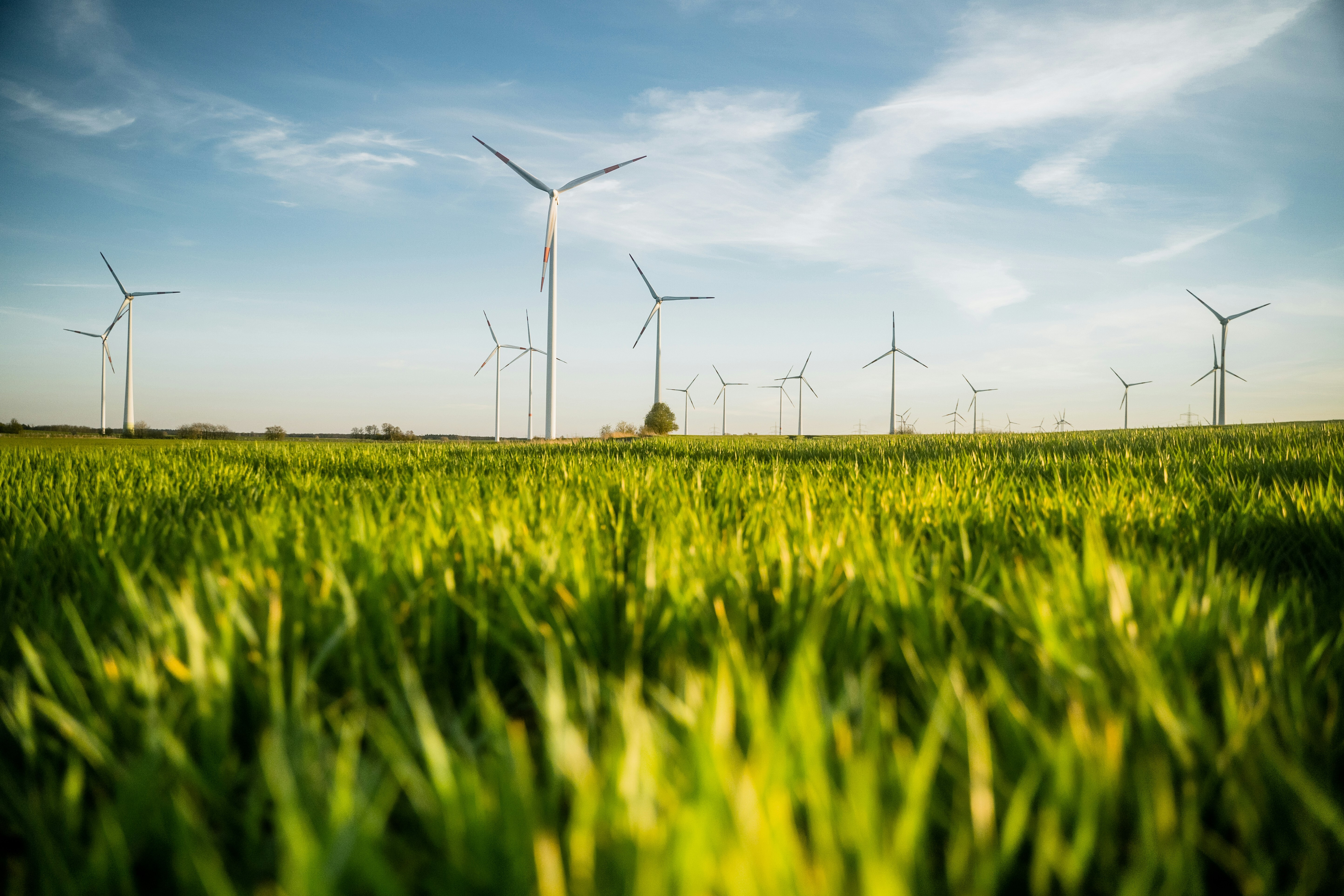 Photo by Moritz Lange
My wife and I grew up in Illinois. She from the central part of the state, me from Chicago, and we both went to the University of Illinois. So believe me when I tell you, if you drive between Chicago and, well, anywhere else in Illinois, you’ll see a whole lot of nothing land between here and there.
Over the years, though, something new showed up. If you drive at night, you’d think there was some kind of UFO sci-fi pulsating light experiment going on. But during the day you’d see wind farms. Hundreds and hundreds of windmills with three enormous airplane-looking blades. More accurately: wind turbines.
And as I get more interested in these wind farms, something curious stands out. The company that owns this farm I’m often driving through is Ørsted, a Danish energy company. Most of the turbines come from GE. But if you look into GE’s wind ancestry, they acquired a bunch of their business from Enron. And Enron had acquired from Zond. And the turbines Zond was buying. Those came from Vestas. Another Danish company you’ll read more about in a sec.
So why is wind power so Danish?
In the 1970s, a carpenter named Christian Riisager, in the Danish village of Skærbæk, was curious if he could get electricity from the stream behind his house, so he built a waterwheel that powered his garden lights.
Then he began experimenting with wind. He tested wooden blades in his workshop with a blower, a bicycle dynamo, a light bulb, and a voltmeter.
By 1975, he’d built a 7.5-kilowatt turbine that supplied his house. He connected it to the grid through the washing-machine socket. His wife, Boe, watched the electricity meter run backwards while he watched the blades turn outside.
His neighbors and journalists noticed. Soon other people wanted their own.
Other small builders in Denmark were experimenting too. Some were trying to heat water. Many used parts from scrapyards. They learned from earlier machines and from one another.
Meanwhile, in the United States, the oil embargo of 1973 freaked a lot of people out about our dependence on foreign oil (history rhymes, huh?). NASA and the Department of Energy worked on a series of experimental wind turbines.
They wanted megawatts as quickly as possible. Their program started with the 100-kilowatt MOD-0, with plans to move rapidly to machines producing thousands of kilowatts.
The machines produced electricity and useful research. But the program failed to create the commercial wind industry its planners had hoped for, despite accounts of spending $350 million on this program.
The US government, oddly self-aware here, shared their own account:
each stage of the Mod-Series Program had little time and opportunity to internalize lessons from previous stages.
Riisager already had something useful in his backyard. He could watch it work. Other people could see it, ask questions, and want one too.
And the Danes just kept building from those small experiments. Bigger and bigger turbines.
Riisager didn’t invent Danish wind power himself. He had the benefit of being able to build small and with a pace that suited learning from all earlier work, including Johannes Juul’s turbine. That three-bladed, upwind machine helped establish what became known as The Danish Concept. Riisager eventually started making turbines for a bigger company called Windmatic. And Windmatic was eventually acquired by Vestas.
Those GE turbines in the middle of Illinois I see today. Those are Danish Concept.
I don’t bring any of this up to argue that big visions for the future are bad. I’m glad people keep improving things and dreaming bigger. Those enormous turbines weren’t going to stay little backyard experiments forever.
But what gets me is how often we wait for the thing we think we need.
More money before we start a business. Endless meetings before anyone tries a solution. A clearer picture of where it’s all going before we make anything at all.
It’s like we want to build a house before anyone has bothered learning to make or lay a brick.
There’s a parable from Hans Christian Andersen called “Something”, about five brothers who all want to leave their mark in the world. One wants to be a builder. Another, an architect. Another wants to be a genius who invents a whole new style of building. The youngest just wants to be a critic of other people’s ideas.
But the brother that interests me the most is the eldest. He wants to do something humble. He just wants to make bricks.
And he does. Some of his bricks are broken or imperfect, so he gives them, along with a few whole ones, to a poor woman named Margaret. She uses them to build herself a little house.
The house isn’t perfect either. It’s crooked. The door is too low. The roof leaks.
But it’s a shelter. It’s sturdy.
Years later, Margaret is old. Ill. One day from her house she can see townspeople celebrating on the ice. But she also sees a dangerous looking storm approaching.
She knows the ice is about to break apart. She calls out, but she’s too far away for anyone to hear her. And too weak to go to them.
So she sets her bed on fire.
The townspeople see her burning house and rush off the ice to rescue her. They reach shore just as the ice breaks apart.
She saves those townspeople. But she doesn’t survive the cold.
At the gates of heaven, Margaret tells the story of her home including the kindness of the guy who gave her the bricks. The eldest brother had been dead for years. He never knew what Margaret would do with those bricks.
That’s the part I keep thinking about. He couldn’t have imagined where his work would eventually matter. You just have to have belief that the process of making the first small useful thing will eventually be learned from. Built upon. Like bricks. Even if the bricks weren’t good enough at first.
That’s a lesson from those Danish windmills. And Hans Christian Andersen. Who, wouldn’t you know. He was Danish too.